Simplified Lux Calculator

Finding the right lighting for a space doesn’t have to be a lengthy process or reserved only for experts.
Whether you’re planning the lighting for an office, a shop, or an area of ​​your home, knowing exactly how many fixtures you need—and most importantly how to arrange them—is the secret to achieving a comfortable result and avoiding dark areas.
We developed this calculator to give you a quick and reliable estimate, without having to use complex simulation software. By entering the room dimensions and the product’s technical data, you’ll immediately get two key indicators for your project:

  • Average Illuminance (Lux): This tells you whether the overall amount of light is sufficient for the intended use of the room (e.g., 500 lux is ideal for working, 150 lux is sufficient for a passageway).

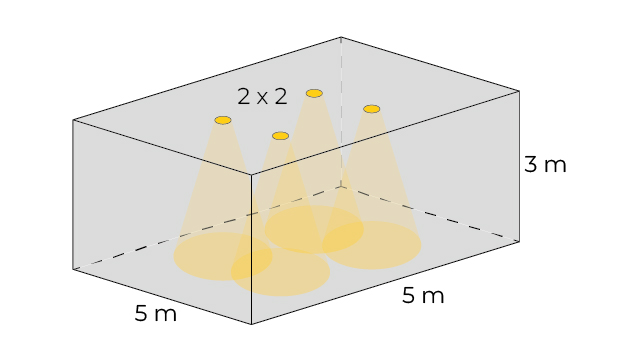
  • Uniformity (U0): This is the parameter that makes the difference between a good project and a poor one. By choosing the exact arrangement of your fixtures (for example, a 2×2 grid or a 4×1 line), the calculator cross-references the beam angles to tell you whether the light will be uniform across the entire surface.

How to use it?
Keep the technical data sheet of the light fixture you want to install handy. You’ll need three key data points: the Lumens, the Beam Angle in Degrees, and the cd/klm value. Enter these along with your room measurements and play around with the amounts until the Uniformity indicator passes the critical threshold of 0.40 (and stops flashing red).

Product data example

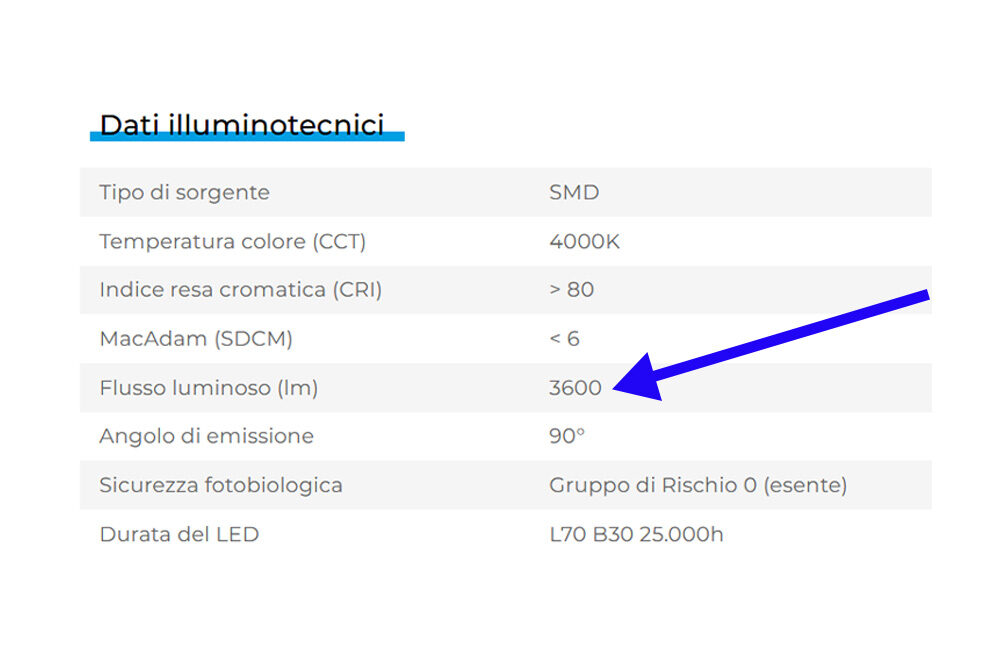
Where can I find the flux (lm)?

In the example: 3600 lumens

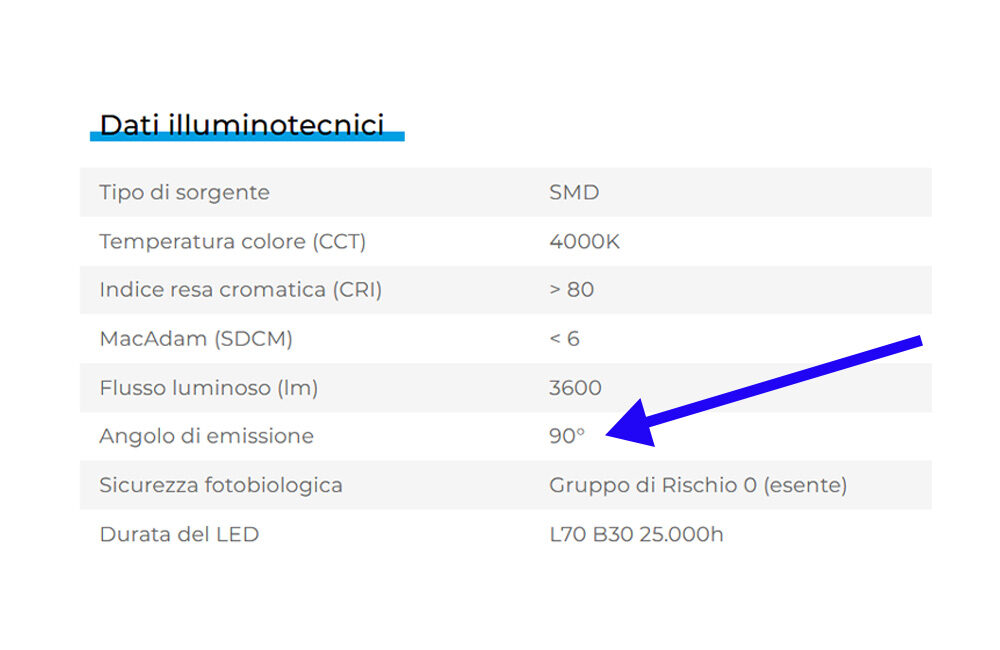
Where to find the beam angle (°)?

In the example: 90° beam